You are here: Home Where We Work Namibia

Namibia

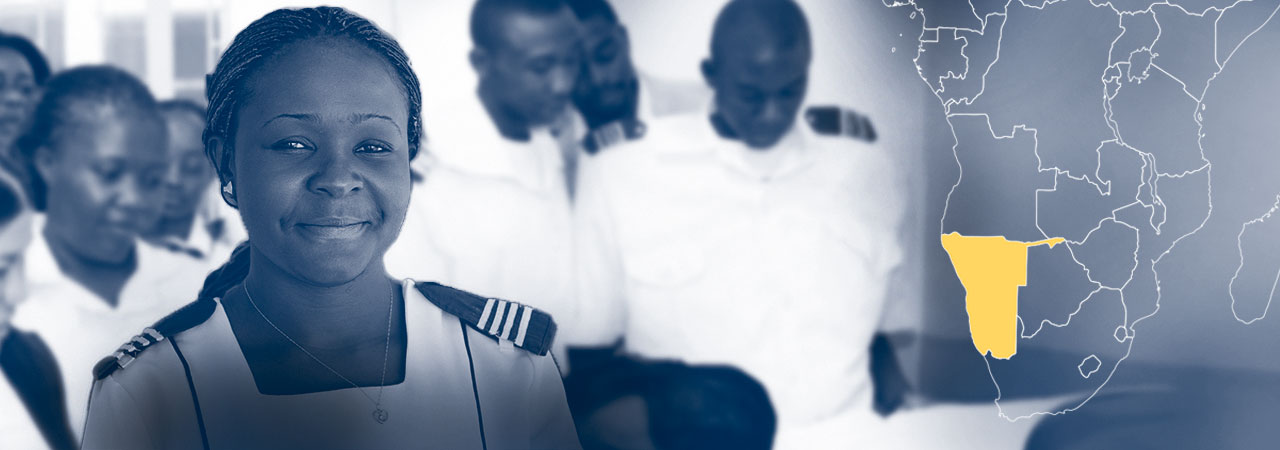
I-TECH has been working in Namibia since 2003 to build human capacity to confront the country’s HIV and AIDS pandemic. I-TECH augments the skills of practicing health care workers and nursing students through classroom and onsite trainings that employ curricula specifically designed for the Namibian context. It is also helping to develop national health policies and guidelines. Further, I-TECH is spearheading the adoption of new technologies for distance learning, including digital video conferencing (DVC).

Spotlight: Rapid Testing Activities in Namibia

The MOHSS carried out the first national HIV-testing campaign in May 2008, with most outreach activities taking place in the Khomas Region in the center of the country. Preliminary campaign data showed 33,833 individuals were tested, of whom 99.8% received their results.

In response to the high HIV sero-prevalence (39.4%) among pregnant women in the Caprivi Region, which is in the northeast part of the country, a special additional testing day was held there in June 2008. Five new sites rolled out HIV testing, bringing the total number of testing sites in the Caprivi region to 15.

I-TECH’s Laboratory Training Coordinator and its Counselling Programs Advisor were part of the National Testing Day Steering Committee and provided logistical and technical support throughout the campaign. These HIV counselling and testing (HCT) campaigns are testament to the ability of health care workers and community counsellors trained in HCT to apply their knowledge and skills to an effective strategy to ensure that increasing numbers of people learn their HIV status.


Namibia

Overview

I-TECH has been working in Namibia since 2003 to build human capacity to confront the country’s HIV and AIDS pandemic. I-TECH augments the skills of practicing health care workers and nursing students through classroom and onsite trainings that employ curricula specifically designed for the Namibian context. It is also helping to develop national health policies and guidelines. Further, I-TECH is spearheading the adoption of new technologies for distance learning, including digital video conferencing (DVC).

Program Highlights

  • Strengthening HIV Management through Sexually Transmitted Infections (STIs) Training.
    Dr. Shepherd U. Shonhiwa, I-TECH’s Sexually Transmitted Infections (STIs) Advisor; Dr. Sandya Clinical Mentor, NamibiaWellwood, Clinical Mentor; and the I-TECH Curriculum Development Team collaborated with the Ministry of Health and Social Services (MOHSS) to adopt and develop Namibia’s national STI management guidelines and a related STI curriculum. The new curriculum will be pilot tested with doctors in April 2009.
  • Improving Communication and Expanding the Reach of Training with DVC. I-TECH is using DVC to connect 14 health facilities in 10 out of 13 regions in Namibia that are linked to the National Health Training Centres network. DVC is used for conducting trainings, meetings, and case conferences.
  • Modeling Best Practices with Clinical Mentoring. I-TECH's clinical mentors are physician-trainers who are experienced with HIV and AIDS. They build ongoing relationships with government clinicians treating HIV and AIDS, provide onsite training and consultation on HIV and AIDS cases, and work with health care facilities on creating systems interventions to improve service delivery.
  • Expanding the Scope of Nurses through Integrated Management of Adolescent and Adult Illness (IMAI) Training. I-TECH has adapted the World Health Organization’s IMAI training materials to the Namibian context and is now working closely with the MOHSS to roll out trainings throughout the country.
  • Strengthening Systems and Modeling Best Practices with Clinical Site Support Visits. I-TECH works with National and Regional Health Training Centres' in-service tutors to promote the transfer classroom learning to the clinical setting. Tutors take advantage of "teaching moments" in the clinic to address areas like strengthening record keeping, using safe delivery practices, administering nevirapine, and building skills in voluntary counseling and testing. The tutors’ work also serves to identify what topics need further development within the training curricula.
  • Building Pre-service Capacity. I-TECH is integrating HIV and AIDS topics into the University of Namibia NurseNamibia (UNAM) nurses' training, and is supporting and developing pre-service staff capacity to teach HIV and AIDS topics at both the university and the National Health Training Centre network.

Training Materials

I-TECH has developed and delivered the following material for in-service training of health care workers:

  • Healthy Mothers, Healthy Babies: Prevention of Mother-to-Child Transmission (PMTCT) in Namibia
  • Training on Dried Blood Spot Specimen Collection for HIV DNA PCR Testing for Infants
  • Nutrition Management with HIV and AIDS: Practical Tools for Health Workers
  • Training on the Use of the Namibian Guidelines for Antiretroviral Therapy (ART)
  • Clinical Care of HIV and AIDS and Opportunistic Infections
  • Physician Training on the Use of the Namibian Guidelines for the Management of Tuberculosis (TB)
  • Nurse Training on the Use of the Namibian TB Guidelines
  • Voluntary Counselling and Testing
  • Rapid HIV Testing Course
  • Couples HIV Counselling and Testing
  • Community Counsellor Training Programme
  • Training of Trainers for Health Care Professionals
  • Training on Comprehensive Paediatric HIV Care
Document Actions